Menu
How Freeze–Thaw Cycles Impact Newton House Foundations
Concrete Foundation Repair Newton
While the consistent fluctuations in temperature during Massachusetts winters are a staple of the beauty that is associated with the state’s geology, they also provide an ever-present risk to the long-term integrity of residential structures. It is because of the continuous freezing/thawing processes that cause damage to the structural integrity of home foundations in Newton (particularly the need for older Newton homes’ concrete foundation repairs), especially when the ground is saturated and then freezes. When water becomes saturated in the ground and then freezes, it increases in volume and subsequently puts extreme pressure on the basement walls and footings of a building, which is called “frost jacking.” Knowing how this detrimental process works and when to seek help from professionals will allow you to maintain your home’s structural integrity and value. Early intervention will prevent the cosmetic issues created by small cracks in walls or floors from becoming structural concerns that can lead to much larger problems with the structure of your home.
Understanding the Mechanisms of Frost Damage
It is critical to understand the mechanisms of frost damage as both occur simultaneously to produce damage to the walls of a foundation. These are frost heaving and lateral forces from frozen saturated soils.
Vertical Movement (Frost Heaving)
Frost heaving occurs when frost-susceptible soils are saturated with water and subjected to a temperature of zero degrees Fahrenheit (freezing). As the water in the soil begins to freeze, layers of ice (ice lenses) begin to form parallel to the frost line. As additional layers of ice continue to grow in size, the upward force exerted by each layer of ice causes the soil above the frost line to rise toward the surface. This force will also push on the portion of the foundation located at or below the frost line. If the footings of the foundation are not located below the frost depth (which varies but is typically four feet), then this upward force may cause the portions of the foundation located at or below the frost line to rise or be displaced, creating significant vertical cracking in the concrete.
Horizontal Pressure Against Basement Walls
In addition to the vertical heaving mentioned above, the saturated soil next to the basement wall will expand laterally as the water in the soil freezes. When the water in the soil next to the basement wall freezes, it will expand, creating an outward force on the basement wall. This outward force will apply pressure against the basement wall, and potentially cause it to move inward, producing horizontal cracking in the wall (horizontal cracks) or stair-step cracking in the wall. Since horizontal or stair-step cracking in the basement walls indicates that the structural integrity of the entire home has been compromised, the horizontal cracking must be repaired immediately using concrete foundation repair methods. Furthermore, since the horizontal cracking in the basement walls is indicative of water seepage into the basement, it is likely that the homeowner will have issues with basement water leakage, particularly if the home is located in a low area adjacent to the Charles River.
Recognizing Early Warning Signs of Damage
As previously stated, homeowners should be able to recognize the early warning signs of damage to their concrete structures due to the effects of freeze-thaw cycles.
Cracking and Spalling
Large horizontal cracks, stair-step cracking, or evidence of widening cracks over time are all red flags indicating that the concrete structure is experiencing significant stress due to frost damage. Furthermore, spalling (flaking or pitting of the surface of the concrete) is indicative that there is excessive water infiltration into the concrete, which creates a condition where the concrete is expanding outward during the freezing process. By identifying these signs early, the necessary repairs can be made using less invasive repair techniques.
Sticking Doors, Windows, and Uneven Flooring
While the physical damage from the frost heaving will generally occur at the base of the affected walls of the home, the symptoms of the damage will generally manifest far from the site of the physical damage. Examples include doors that no longer close properly, or windows that no longer function properly, or exhibit obvious gaps between the frame and surrounding masonry. Another example includes interior flooring that becomes uneven or sloping. All of these examples are indicative that the structural components of the home are settling unevenly, which is symptomatic of underlying damage to the foundation of the home that necessitates a professional evaluation.
Advanced Techniques for Concrete Foundation Repairs
High-Pressure Injection of Sealants
For small non-structural hairline cracks that are allowing water to leak into the home, the use of high-pressure injection of sealants such as epoxy or flexible polyurethane is considered the “gold standard” for concrete foundation repairs. The epoxy used in this method will provide structural bonding and strengthen the wall, while the polyurethane will fill in the crack and prevent water from entering through the same location in the future, thereby stopping the freeze-thaw cycle that was occurring within the concrete itself. High-pressure injection is commonly used to solve many common basement leaks.
Water Management and Grading
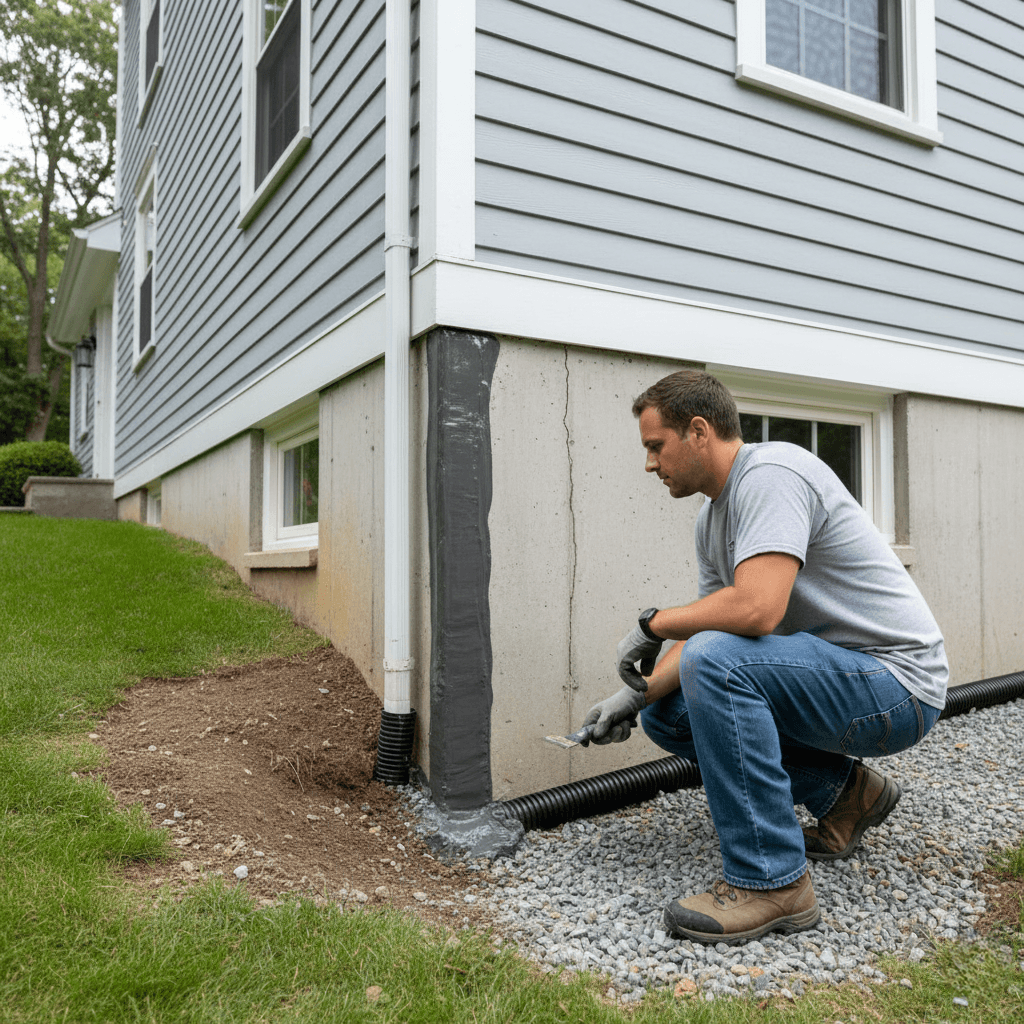
The most important long-term repair often involves correcting the way water moves around the home. We correct the grade of the yard to slope at least six inches over ten feet away from the foundation. In addition, we install new or repair existing exterior waterproofing membranes, dimpled drainage boards, and footing drains or similar systems, to eliminate standing water that can saturate the soil and create conditions for ice to form.
Protecting Your Home from Future Damage
Insulating Foundation Walls
By installing rigid foam insulation (such as XPS or EPS board) to the exterior of the foundation walls, you reduce the amount of cold being transferred into the foundation walls. Additionally, the insulation helps to maintain a consistent temperature of the soil against the concrete foundation walls. Both of these benefits help to decrease the depth of the frost line near the home and subsequently decrease the likelihood of frost heave and lateral forces acting upon the structure.
Protecting your home in Newton from the cyclical destructive nature of freezing and thawing requires a multi-faceted approach that includes providing stability to the structure, eliminating moisture sources, and utilizing professional-grade repair products. Failure to identify the signs of damage to your home will ultimately result in costly, large-scale structural instability of the home and a shortened life expectancy of the home. Please contact Newton Total Concrete to discuss your concerns regarding your foundation repair.
LATEST POSTS