
Menu
Smart Patio Layouts for Long, Narrow Newton Backyards
Concrete
Because many “classic” Newton properties (especially those with older development or located near the downtown area) have back yards which are long and narrow, they create design challenges for enhancing the functional use as well as the visual appeal of those areas. Designing a concrete patio that creates a multi-functional space from an awkward corridor is one of the greatest ways to improve your property’s value and enjoyment. To do this effectively, homeowners need to focus on smart zoning of the different areas, utilize linear elements within the design, and incorporate some type of landscaping to create an overall cohesive space. Strategically selecting materials and being knowledgeable about layout will help you achieve this.
Dividing Space and Creating Zones
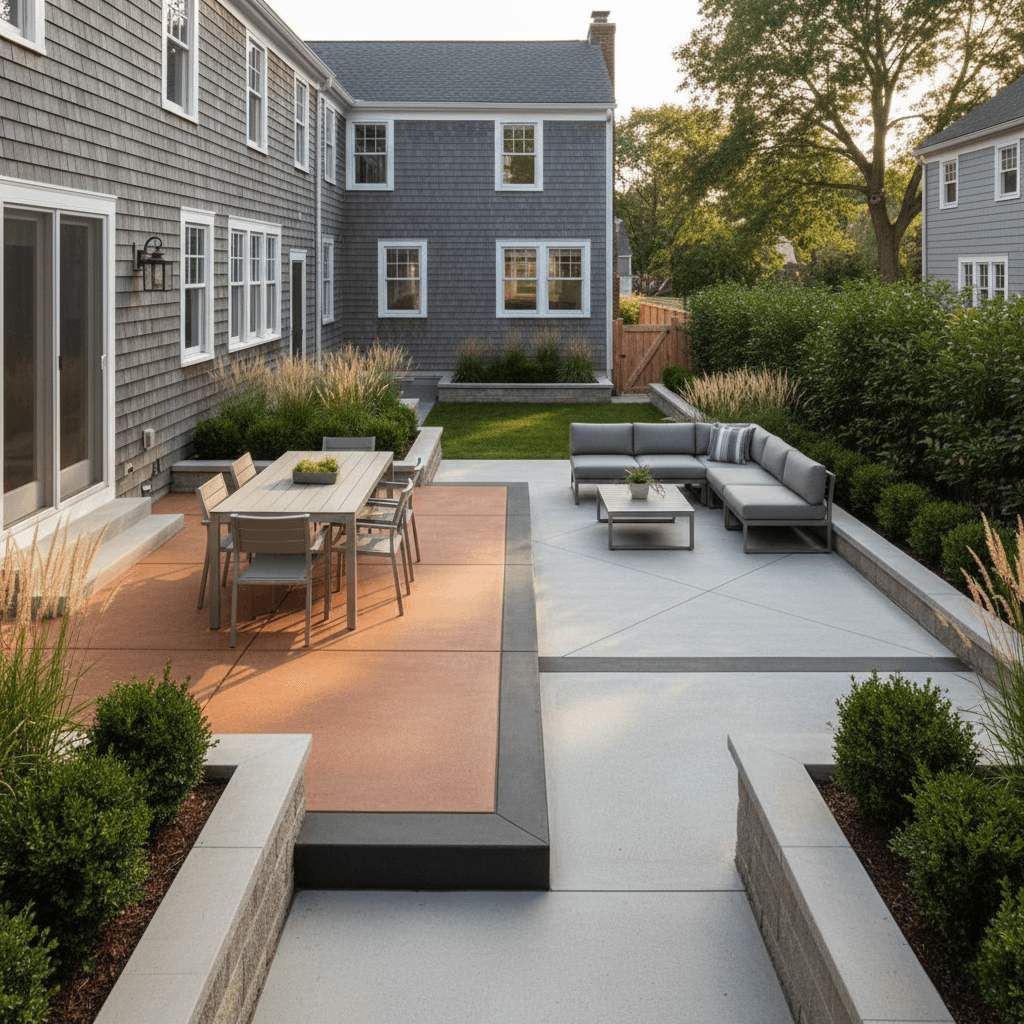
Divide the space by creating zones to create the illusion of width. Create a number of zones to maximize the usable length of the space. Each zone must have a defined function so the area does not look like a single continuous walkway.
Designating the Main Dining Area: Put the main dining area where it will be convenient to the house or the kitchen. This area needs to have a large enough level area to put a table and chairs. Most of the time, we use a single pour of concrete to complete this area to ensure a stable and easy-to-clean area for meals. Also, by placing the dining area close to the house, you encourage the natural flow of entertainment from indoors to outdoors.
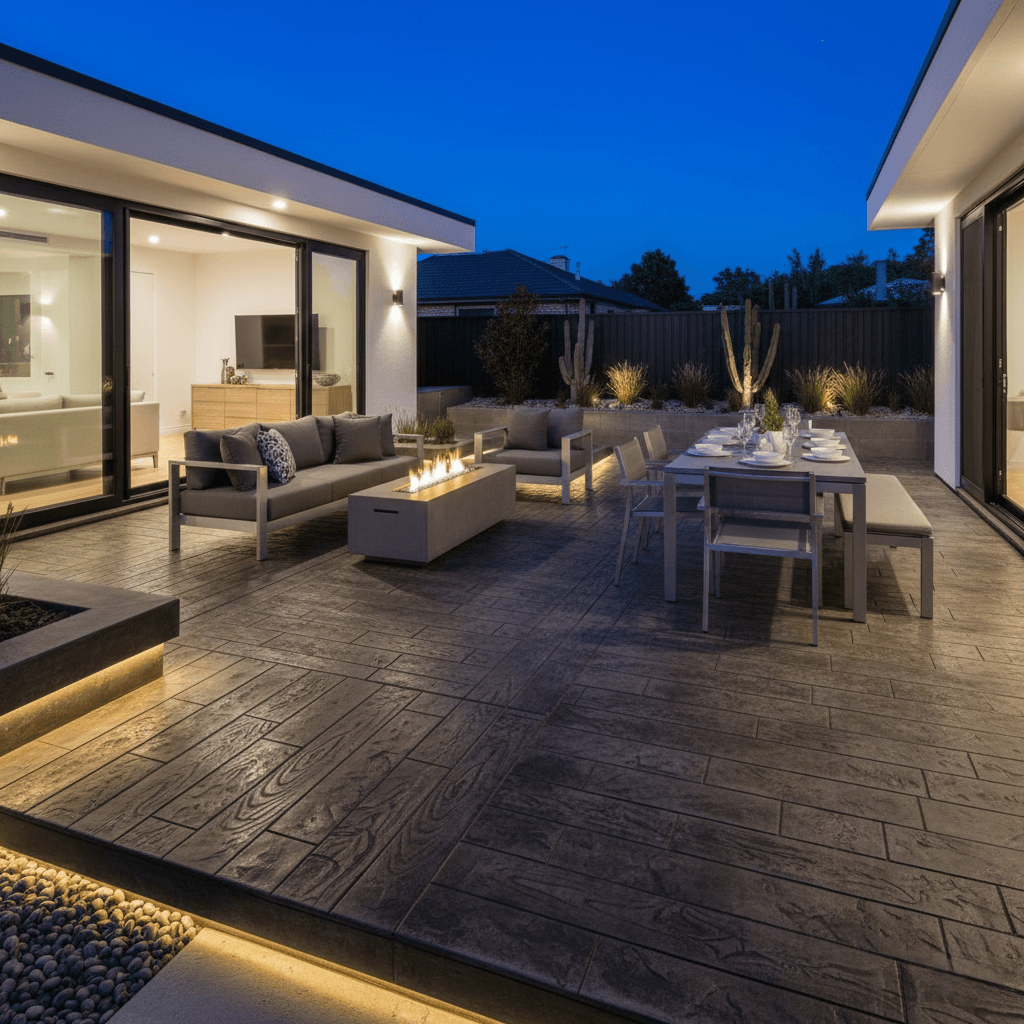
Designating the Second Living/Conversation Area: Place the second living/conversation area at the midpoint or end of the yard to create a focal point and destination in the yard. Use a different finish (such as a different color or a subtle pattern) to help break up the length of the yard and create a visual separation between the two areas. By using a different finish to separate the two areas, you are signaling to people entering the yard that they are moving into a different function area, thus breaking up the linear feel of the narrow yard.
Manipulating the Eye
By manipulating how the eye views the narrow space, we can make the space look wider or make it look like there is less length in the space.
Using Patterned Concrete to Make the Narrow Space Look Wider: When using stamped concrete or scoring lines on your patio, the orientation of the pattern across the width of the patio versus down the length is a key optical trick to create the illusion of width. For example, if you are using a stamped plank pattern or wide scoring lines, the direction of the planks or lines should run horizontally to the house to draw the eye side-to-side. When you do this, you create the illusion of a wider concrete patio, and the space feels larger.
Adding Visual Barriers: Visual barriers prevent the backyard from looking like a tunnel. Small concrete walls, built-in planter boxes, or raised areas can be very good visual barriers to create a division between zones. Not only do these elements create a more three-dimensional space, but they also create height and depth in the yard, eliminating the flatness of the yard. For example, a small retaining wall can create a barrier between the dining area and the conversation area.
Creating Landscape Elements and Planters
Good landscape work helps soften the hard edge of the concrete and helps integrate the patio with the rest of the yard.
Concrete Built-Ins for Planters: Built-in concrete planters are a fantastic way to incorporate plants without losing floor space. Because they are made from the same material as the patio and have the same clean lines, they help create a cohesive look throughout the entire yard. They can be placed along the perimeter of the patio or used as low dividers to slightly separate the different zones previously mentioned and add color to the yard year-round.
Maximizing Vertical Space: Vertical gardening or the use of trellises maximizes plant growth while still leaving room to walk around the patio. Tall, skinny plants like columnar trees or vines growing on a privacy screen pull the eye upwards, helping to minimize the narrowness of the yard. This type of gardening adds a private feel and creates a lush feel in a densely populated neighborhood like those found near hospitals like Newton–Wellesley Hospital.
Choosing Finishes
Finishing choices greatly affect the maintenance requirements and the overall design success of the outdoor space.
Choosing Light-Colored Finishes and Applying Sealants: Light-colored concrete and finishing products like soft tan or off-white absorb less heat and allow more light to reflect, making the narrow patio seem larger and lighter. Quality UV-resistant sealants protect the finish and keep the color consistent while providing a long-lasting, easy-to-clean surface and reducing the potential for stains caused by patio furniture or spills.
Smoothing Out the Texture: You want to create a sense of continuity when designing a long pathway through a narrow yard. While you need to create a clear distinction between each zone, you don’t want too much texture to distract from the flow of the pathway. We recommend applying a light broom finish or slight stamping to create just enough texture to prevent slipping, yet not create a distraction from the overall look of the pathway.
Experience with Working in Tightly Confined Spaces
Working in a confined space like a narrow backyard requires a lot of planning, precise positioning of equipment, and the ability to pour concrete smoothly and quickly without damaging adjacent property or structures. Our years of experience ensure that your construction process is quick and uneventful, allowing us to deliver high-quality results in the least amount of time possible.
Converting a long, narrow backyard into a desirable outdoor living space requires creativity and skill in installing concrete. Creating zones that are visually separated and maximizing the apparent width of a narrow space requires an experienced professional who has mastered all the special techniques to achieve this goal perfectly. Ensuring that the newly installed outdoor space remains durable and aesthetically pleasing for many years is the primary focus of our company. Contact Newton Total Concrete today to begin discussing your unique patio project.
LATEST POSTS